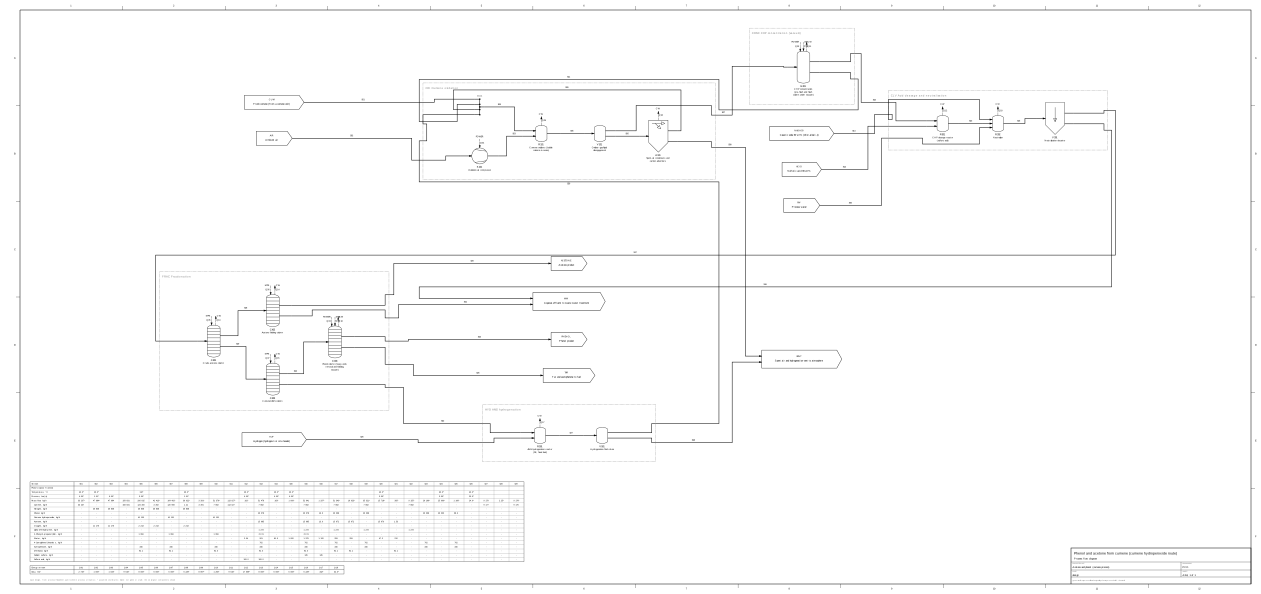
Fresh and recycled cumene is oxidised with compressed air in bubble-column oxidisers (dry oxidation, about 110 C and 500 kPa(a)) to an oxidate of 25 wt% cumene hydroperoxide (CHP); dimethylbenzyl alcohol (DMBA), acetophenone and methanol are the side products. The spent air passes condensers and activated carbon adsorbers, which return cumene. Vacuum flashing concentrates the CHP to 80 wt% and returns the unreacted cumene. Sulfuric acid cleaves the CHP to phenol and acetone and dehydrates most of the DMBA to alpha-methylstyrene (AMS); the rest forms heavies (cumylphenol). Caustic neutralises the acid, and a decanter removes the sodium sulfate brine. Four columns separate crude acetone, product acetone, a cumene/AMS cut, product phenol and a tar of heavies and acetophenone burned as fuel. The AMS is hydrogenated back to cumene on palladium.
All values are concept estimates: the conversion, selectivities and splits are ASSUMED and checked against the ranges of the EU LVOC BREF (2017, chapter 8); the utilities are that document's plant data applied to this design, not calculated. See DESIGN.md for every assumption and gated step.